
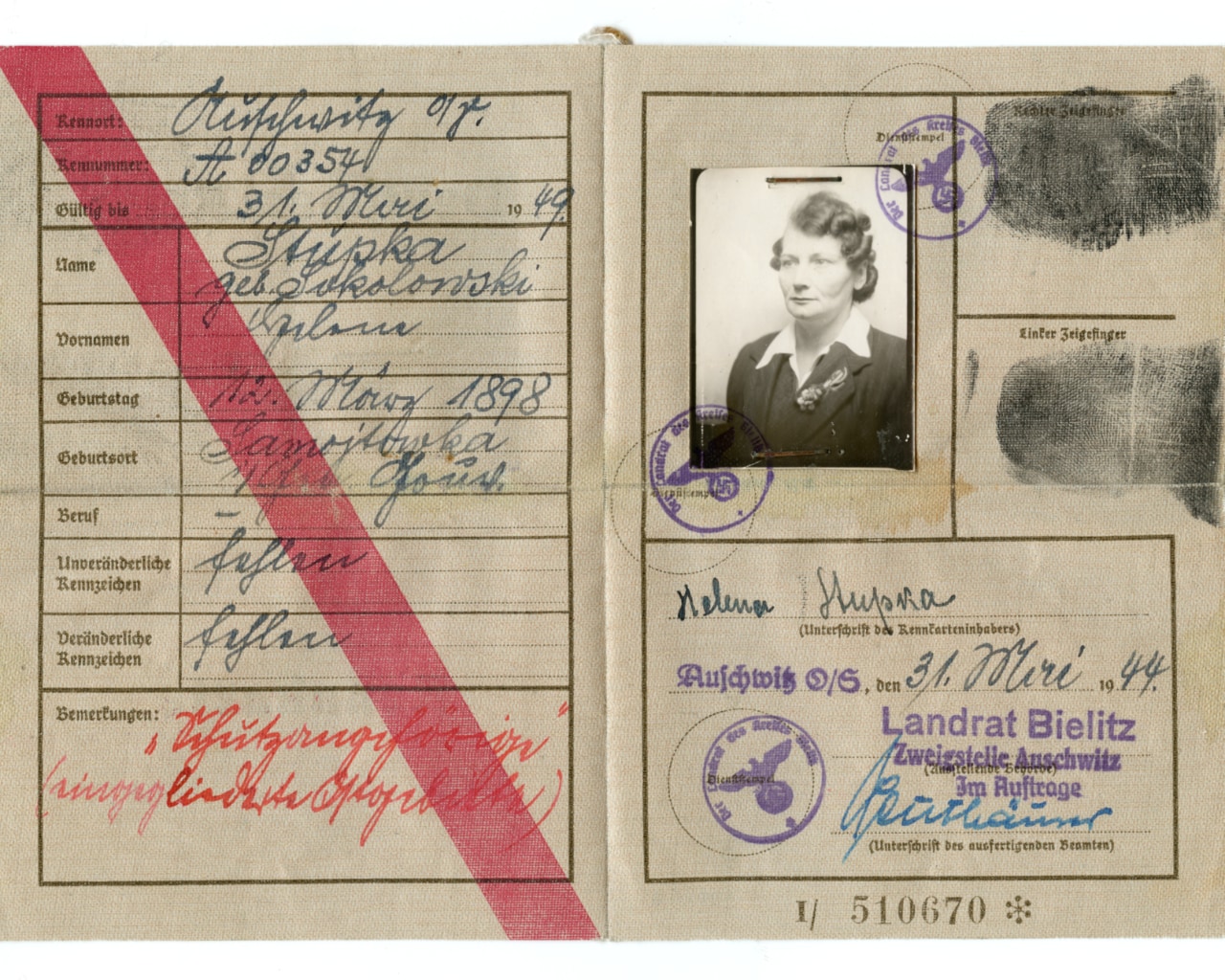
Helena Stupka, née Sokolowska (pseudonym “Jadźka”) was born in 1898 in Samojlowce near Dnepropetrovsk (now Ukraine). She and her husband Jan settled in Oświęcim in the 1930s. Both were active in the community – Jan in the “Soła” sports club, Helena, among other things, in the organisation of charity events and running of an acting club.
After the outbreak of war, she joined the struggle against the occupation. In 1940, she was sworn into the Union of Armed Struggle (later the Home Army). Right from the beginning of KL Auschwitz, she helped its prisoners, coordinating the work of those outside the formal structures of the underground. She provided food, medicine, warm clothing or acted as an intermediary in the exchange of illegal correspondence (secret messages) between prisoners and their relatives. On more than one occasion she personally delivered them to the addressees. She also received documents attesting to the criminal activities of the Nazi Germans in the camp, which were then passed on to her superiors. She also provided assistance to people who escaped from the camp. Among those who took advantage of her aid was the escapee August Kowalczyk.
Her loved ones took part in these activities: her husband and even her son Bronisław Jacek, born in 1935.
In March 1943 Helena Stupka was arrested and imprisoned in the Gestapo prison in Oświęcim. After a week she was released. Fearing another arrest, she left Oświęcim in August of that year – travelling first first to Rajcza, then to Jaworzno. There she stayed until the end of the war, without, however, ceasing her underground activities.
She was awarded the Knight’s Cross of the Order of Polonia Restituta for her attitude during World War II.
She died in 1975 and was laid to rest at the parish cemetery in Oświęcim.
Fot. Zdjęcie – zbiory MPMZO, archiwum prywatne Józefa Jaskółki.