
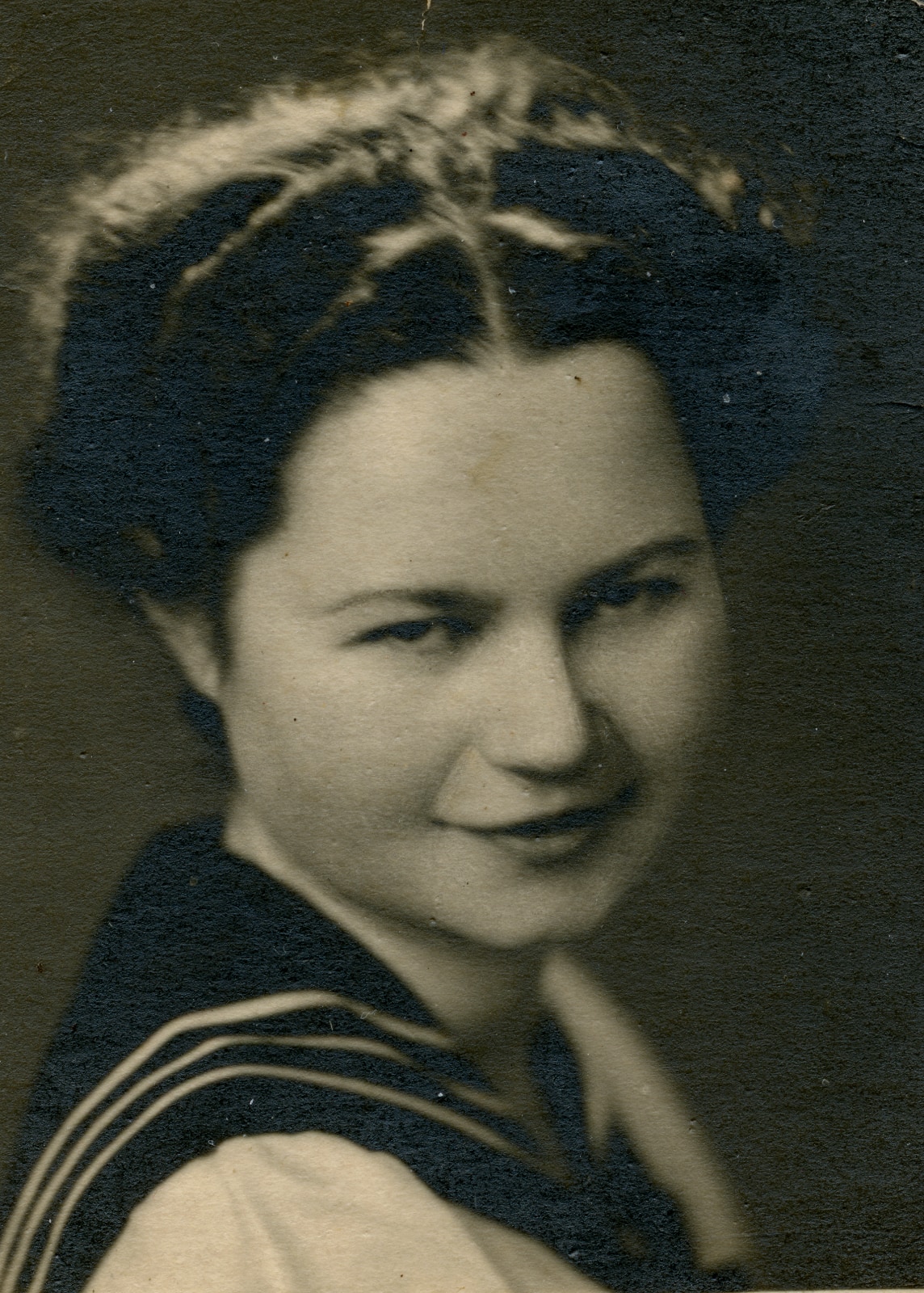
Władysława Krystyna Harat, married name Rzepecka (pseud. “Wanda”) was born in Libiąż in 1925.
She was the daughter of Andrzej Harat – at the time of the Second Republic of Poland an entrepreneur and social activist, and during the German occupation, one of the initiators of building local underground structures.
It was Władysława’s parents, Stefania and Andrzej, who involved her in underground activities as they realised that their daughter was so intelligent that they would not to be able to hide from her the involvement of adults in the resistance movement. She was sworn in and adopted the pseudonym “Wanda.”
She was fluent in two foreign languages, French and German. She was also gifted with a phenomenal photographic memory. These qualities meant that she very quickly went from being a runner to a courier cooperating with both the district headquarters and the Home Army headquarters.
In early 1943, she was given the task of delivering evidence of the criminal activities of the Germans at KL Auschwitz from Katowice to Warsaw which had been stolen from Auschwitz and taken out of the camp during the daring escape of four prisoners in December 1942.
“Wanda” successfully completed the task, despite its extreme difficulty and danger. The documents reached their addressees, including Jan Karski who used them in writing his report presented to the Allies, including to US President F.D. Roosevelt.
Immediately after returning from this mission, in March 1943, Władysława and her mother were arrested and imprisoned for eight months in a prison in Mysłowice. They were released because the occupier hoped that they would be contacted by Andrzej Harat, who played an important role in the Polish underground and whom they would then be able to arrest. However, the Germans’ plans came to nothing.
After the war, Władysława Harat was repeatedly decorated for her underground activities, including with the Officer’s Cross of the Order of Polonia Restituta.
She died in 2017 and was laid to rest in the Podgórski Cemetery in Krakow.
Fot. Zdjęcie – zbiory PMPZO / archiwum prywatne Rafała Harata