
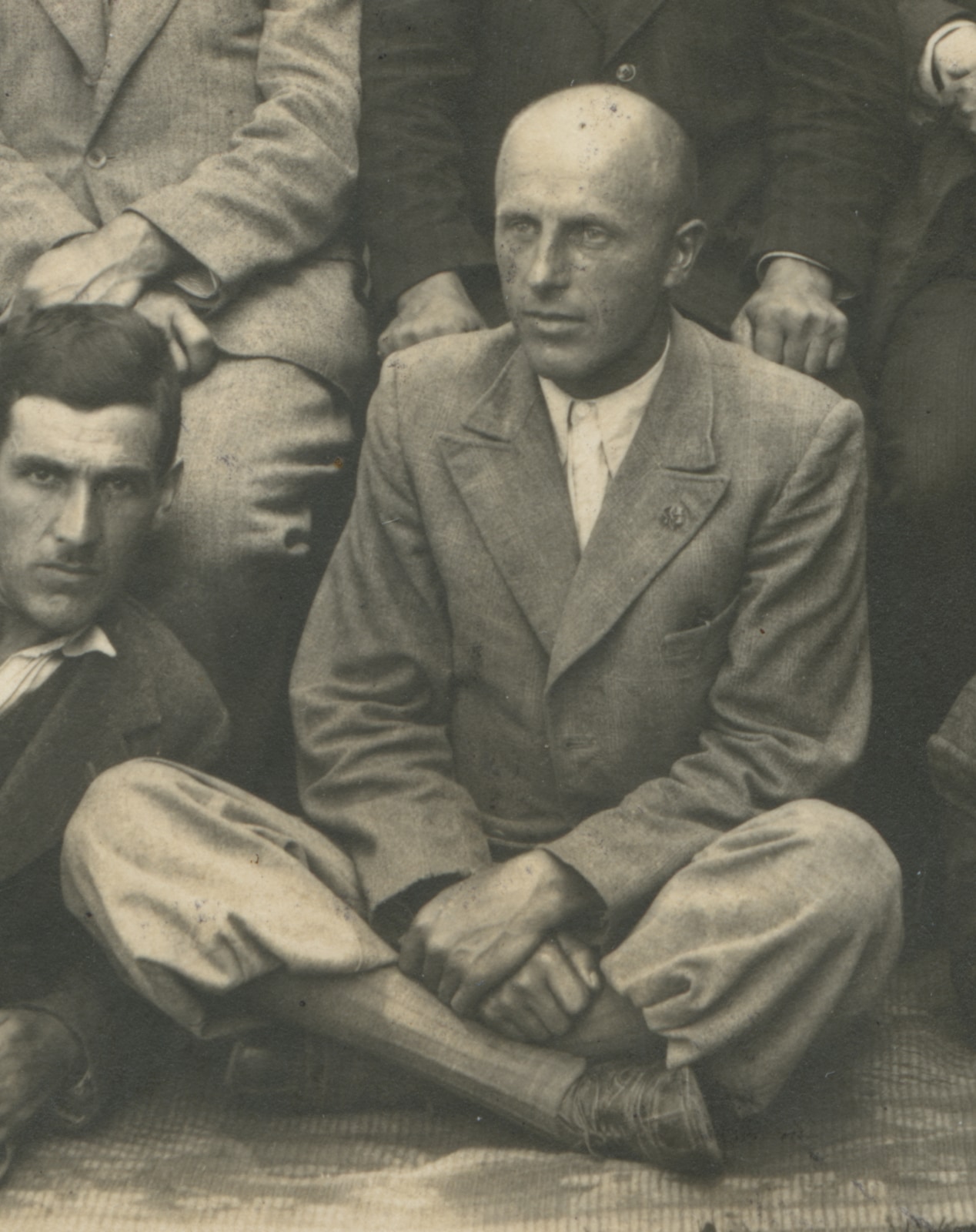
Wojciech Jekiełek (pseudonym „Żmija”, „Wojtek”, „Opiekun”) was born in Osiek in 1905.
During the Second Republic, he was an activist in the Peasants’ Movement, a member of the district authorities of the Polish People’s Party. He was sentenced to six months in a rectification prison for these activities.
At the beginning of the German occupation, he tried unsuccessfully to force his way into the Polish army being formed by General Władysław Sikorski. After returning to his hometown of Osiek, he joined the underground movement. He began publishing the first illegal magazine in the Oświęcim area, “News of the Underground,” later renamed “Orka.” He joined the units conducting armed campaigns, which in time became the Peasants’ Battalions. He became commander of the district.
In the summer of 1941 Wojciech Jekiełek and other Peasants’ Battalion activists set up a special group to help KL Auschwitz prisoners. He expanded its structures, including in its work not only residents of the Oświęcim area, but also people from the Wadowice district and even from the Cieszyn Silesia region, including its Czech part. Thanks to this, food, medicine, clothing or illegal correspondence (secret messages) could be passed into the camp. Evidence of the crimes committed by the Nazi Germans was also collected.
He himself did not shy away from taking part in campaigns. For example, in order to obtain information directly from the camp’s inmates, he entered the camp as a coachman working for one of the transport companies.
He was able to convince the national authorities of the Polish underground state to support the activities of this group. This increased the amount of aid that reached the prisoners.
Such active engagement naturally carried the risk of arrest. This occurred in December 1942. He managed to escape from his temporary detention but was shot in the head during his escape. With the help of many of his associates, he made his way to the General Government after nearly two months of convalescence. There he continued his underground activities, including further assistance to KL Auschwitz prisoners.
After the war, the communist authorities sentenced him to six years in prison in 1947. He was released in 1950.
He died in 1989 and was laid to rest at the Rakowicki Cemetery in Krakow.
Fot. Zdjęcie: zbiory MPMZO / archiwum prywatne Andrzeja Kacorzyka