
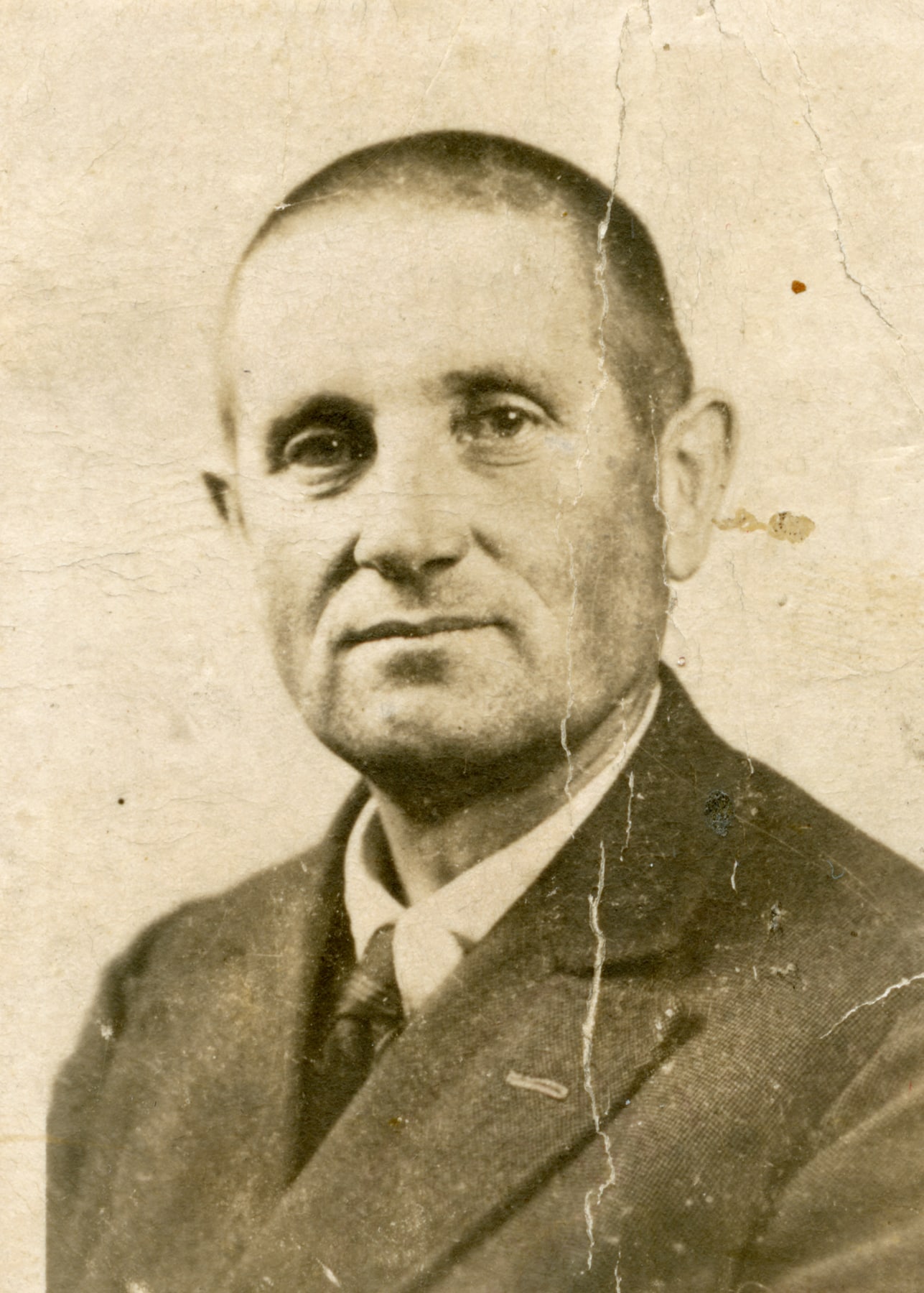
Ludwik Paprzyca, ID photograph
– private archive of the Paprzyca family / collection of The Remembrance Museum of the Land of Oświęcim –
Ludwik Paprzyca was born on 12 October 1902 in Stare Stawy, now part of Oświęcim. He was the youngest child in his family.
After completing primary school, he began working in his father’s brickyard and, before the outbreak of World War II, took over its management.
In 1931, he married Józefa Smolarek, with whom he had three children.
In September 1939, he took part in the defensive war of Poland against Nazi Germany. After escaping captivity, he returned home. The German authorities deprived him of ownership of his brickyard, appointing a German administrator in his place and reducing him to the position of an ordinary worker.
During this time, Paprzyca became involved in clandestine activity. He joined the Union of Armed Struggle (ZWZ), part of the Polish resistance movement, and took part in dangerous operations. He became one of the organizers and a key figure in providing aid to prisoners of the German Nazi concentration camp Auschwitz (KL Auschwitz).
Paprzyca helped smuggle food, medicines, clothing, and correspondence into the camp. At the same time, he directly provided food to prisoners working in the brickyard. The aid network he helped create became known as the “Ochronki”.
In 1941, for assisting a prisoner in his escape, Ludwik Paprzyca was arrested by the Gestapo and deported to KL Auschwitz.
In the camp, he was subjected to torture and pseudo-medical experiments, which resulted in the loss of his hearing. The consequences of these experiences affected his health for the rest of his life.
After the war, the communist regime that replaced Nazi rule regarded him as an enemy of the system. Once again, he was deprived of the right to run his brickyard.
Ludwik Paprzyca died on 10 December 1981 and was buried at the parish cemetery in Oświęcim.