
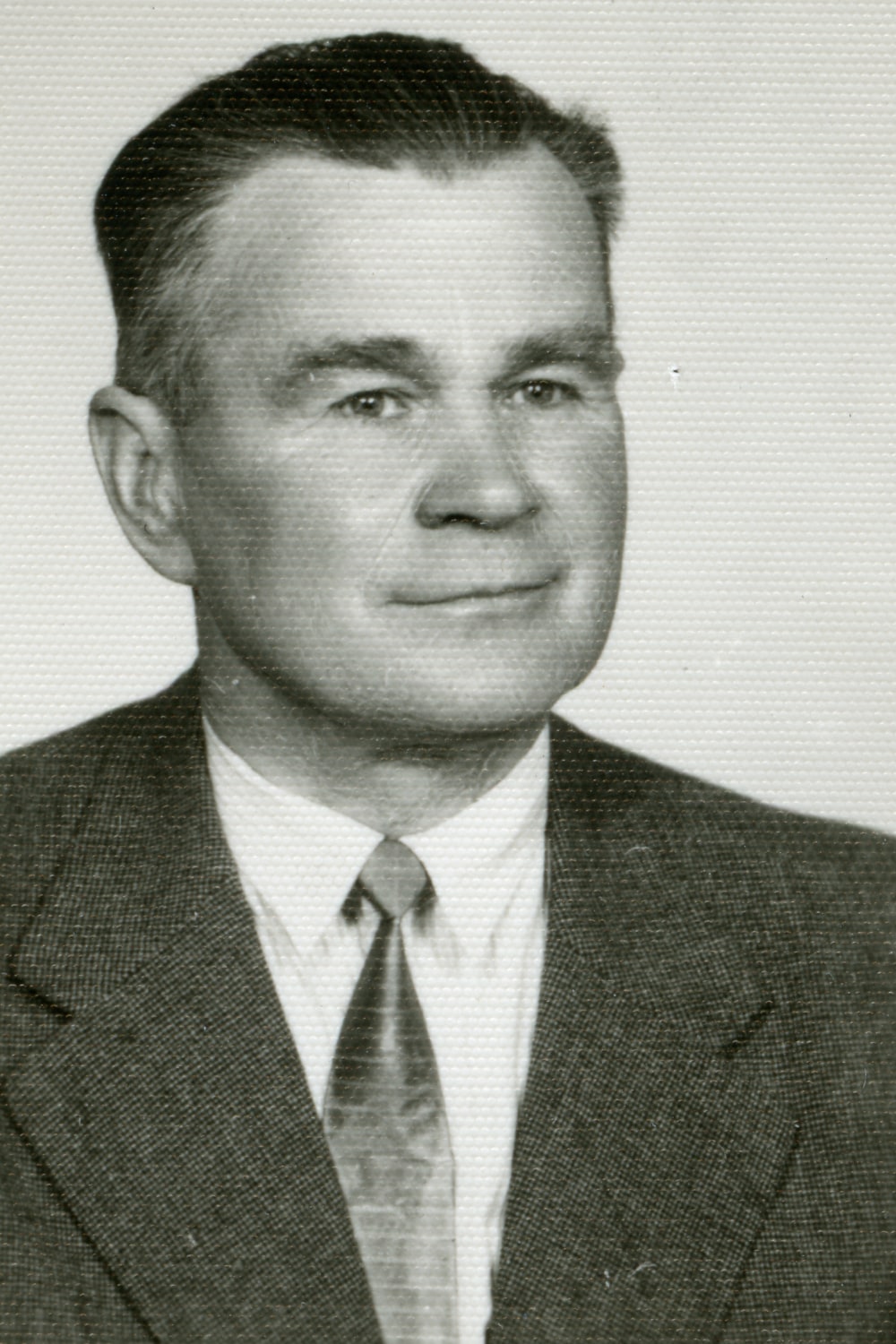
Andrzej Harat (pseud. „Wicher”, „Bagier”, „Czysty”) was born in 1900 in Czaniec near Kęty. Participant in battles to regain and maintain Poland’s independence: soldier in Józef Piłsudski’s Legions (World War I) and the Polish-Soviet War (1920-1921).
During the time of the Second Republic of Poland (1918-1939) he lived in Libiąż. He was a private entrepreneur and social activist. He served as a councillor in the District Council in Chrzanów. In 1934 he was elected Libiąż Commune Head.
He joined the underground movement at the very beginning of the German occupation, becoming a member of the Home Army’s Union of Armed Struggle. Thanks to his position in the commune, he supplied many official documents to members of the underground and to Jews in hiding, as well as radio devices and even weapons seized from Poles.
In 1940, he was arrested by the Gestapo, imprisoned in Mysłowice and sentenced to two years in a correctional prison. Thanks to skilfully simulated insanity, the sentence was changed to a stay in a psychiatric hospital. Due to the intervention of a German official cooperating with the Polish underground, the sentence was postponed until after the war.
In the Home Army structures of the Union of Armed Struggle he held the posts of district quartermaster, inspectorate quartermaster and Inspector. One of the primary forms of fighting the Germans in his area was rendering aid to KL Auschwitz prisoners. He obtained food and medicine for them, exchanged illegal correspondence (secret messages), and co-organised escapes from the camp. He also obtained documents confirming the enormity of the crimes committed in the camp. Threatened with arrest, he went into hiding from the spring of 1943.
His closest family was involved in the underground as well, for which his wife Stefania and daughter Władysława spent several months under arrest.
For his wartime service he was decorated by the Home Army command with the Cross of Valour and the Gold Cross of Merit with Swords.
Andrzej Harat’s persecution did not stop with the end of the German occupation. Shortly after the Red Army entered the area, he was arrested by the NKVD (People’s Commissariat for Internal Affairs) in Bielsko and sent to Siberia. He returned to Poland in December 1948.
He was arrested again, this time by the Department of Security, at the turn of 1951-1952. He was imprisoned without trial until 1957.
He died a tragic death in Libiąż in 1970 and was buried in the local cemetery.
Photograph: Collection of Remembrance Museum of Land of Oświęcim Residents/private archives of Rafał Harat